
Orthopedic Website Blueprint: 11 Must‑Have Features That Turn Visitors Into Patients
When someone’s knee finally hurts enough that they are ready to call a doctor, the first place they usually go is not your waiting room; it’s your website. In competitive markets across Texas, Florida, Louisiana, New Mexico, and Oklahoma, the practices that win are the ones whose sites are easy to find, easy to use, and make patients feel they are in capable hands from the very first click.
At 2ten Marketing, the orthopedic practices and groups that see the best results treat their website as a clinical and business tool, not just an online brochure. It should help your team educate patients, guide them to the right service, and fill your schedule with the kinds of cases you want more of, while still sounding like your practice, not canned marketing copy.
Why your orthopedic website matters so much to your practice growth
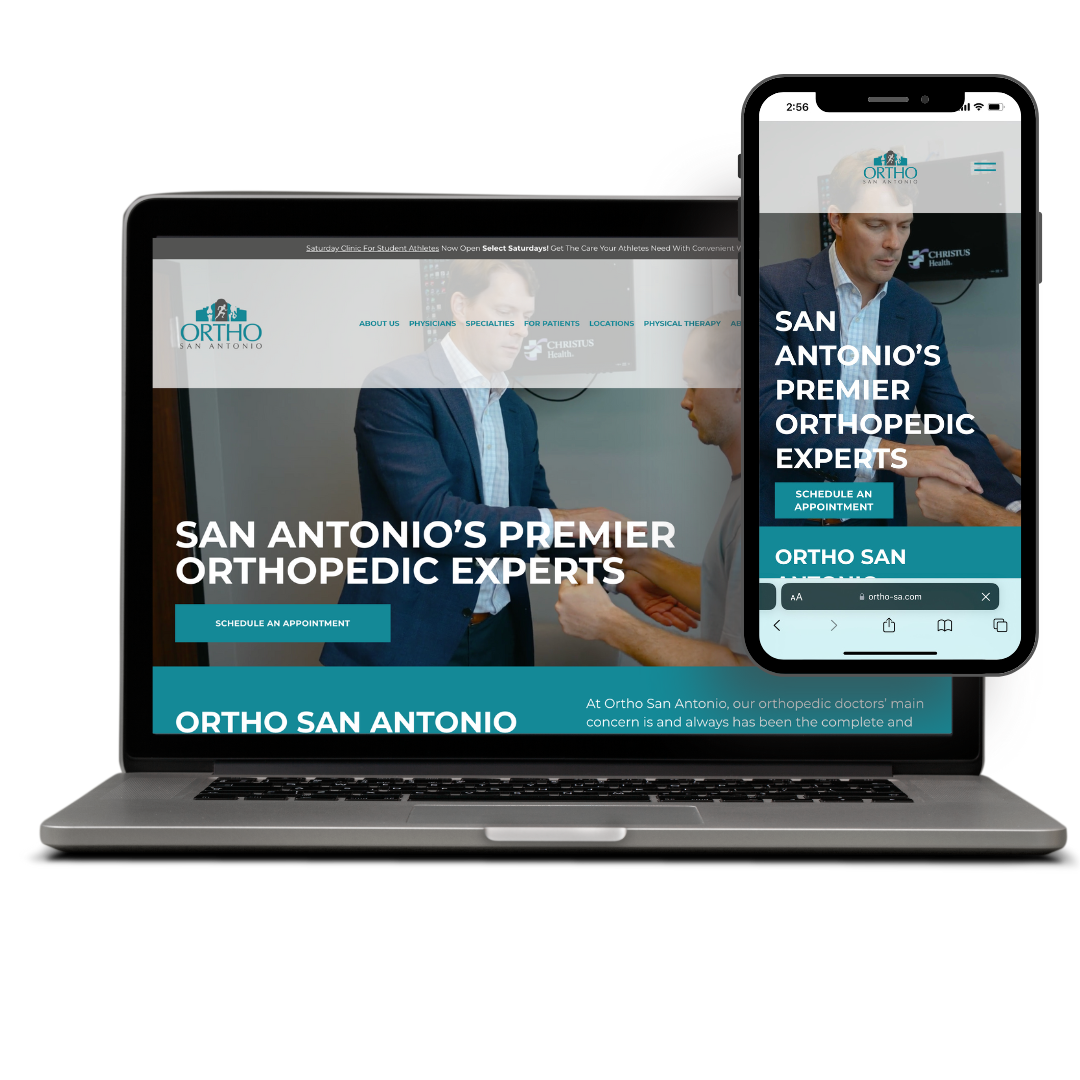
Clean, modernized, and optimized orthopedic practice website. CLICK HERE to check it out!
Most people in your community will Google a few surgeons, skim a couple of sites, and pick whoever feels like the safest pair of hands. If your site is slow, hard to use on a phone, or light on real information, those patients are more likely to call the practice down the road, even if your surgeons are just as skilled.
From what 2ten Marketing sees with Southern orthopedic practices, your website has to work for several different audiences at once:
Patients in pain.
Parents of injured athletes.
Referring providers who want to know their patients will be well cared for.
Getting the fundamentals right makes it easier for all of them to choose your team with confidence.
11 features every high‑converting orthopedic website needs
1. Mobile‑first, fast performance
Your website needs to load quickly and look clean on a phone, because that is where a large share of patients are searching and clicking from. If pages drag, buttons are tiny, or text is hard to read, many visitors will back out before they ever learn how your practice can help.
2. Clear navigation by body area and condition
Patients do not think in terms of service line names—they think “knee,” “shoulder,” “back,” or “hip.” Organizing your navigation by body area and then by condition or procedure makes it simple for someone with shoulder pain in San Antonio or Miami to find the information they need in just a click or two.
3. Dedicated condition and procedure pages
Each major condition and procedure deserves its own page, written in language patients can understand. Separate, focused pages for things like ACL reconstruction, rotator cuff repair, total knee replacement, and hip replacement help search engines understand what you do and make it easier for patients to see that you treat their specific problem.
4. Rich doctor bio pages
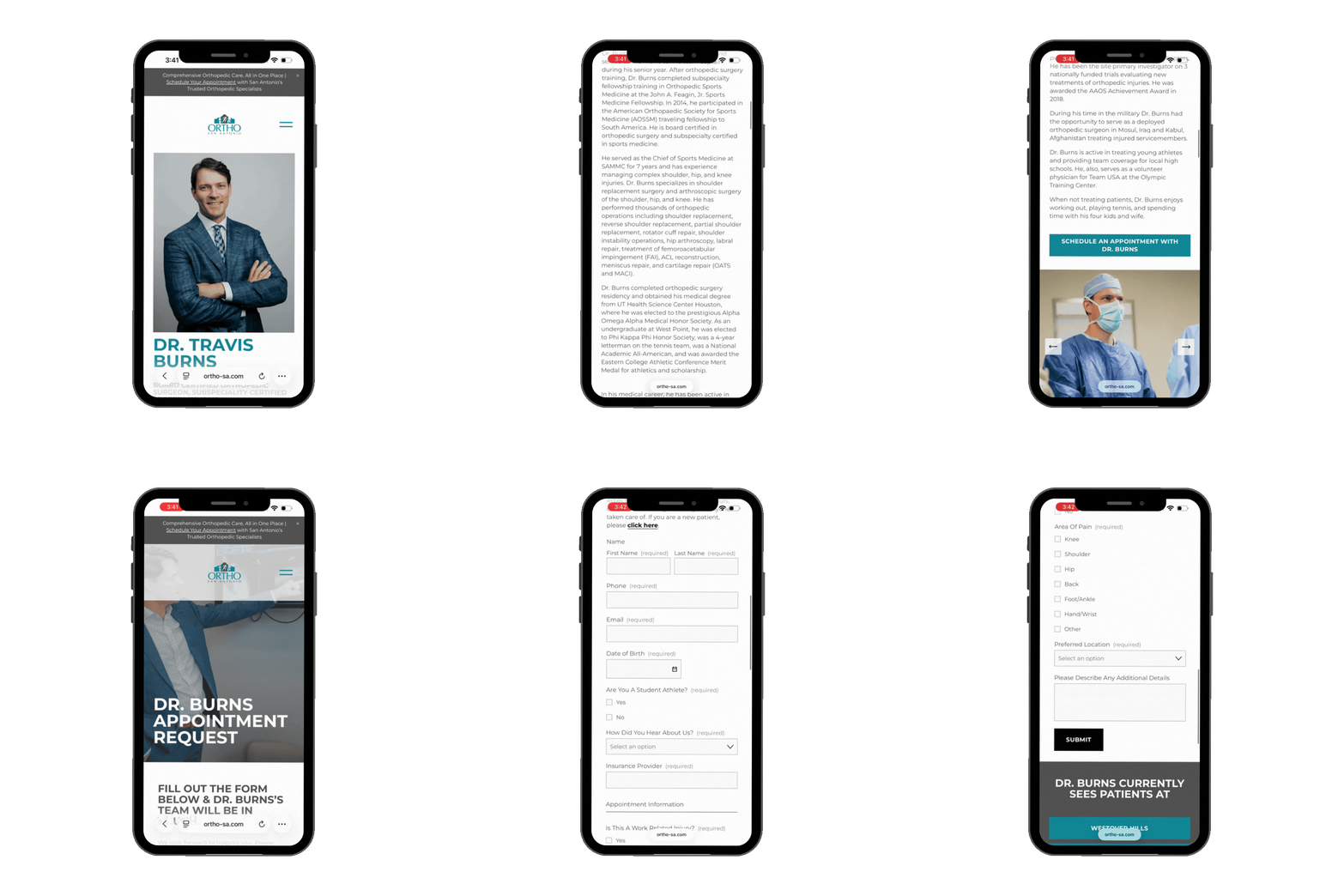
Detailed physician bio? Check. Easy appointment scheduling? Check.
Surgeons and advanced practice providers are a major part of why patients choose one practice over another. Detailed bio pages with training, subspecialties, conditions treated, and a short, approachable summary help patients feel more comfortable, especially when paired with professional photos.
5. Prominent online scheduling and calls‑to‑action
If a patient has to hunt for how to schedule, you will lose appointments. Every key page—home, locations, conditions, and procedures—should include a clear, visible next step such as “Request an Appointment,” “Schedule Online,” or “Call Our Clinic,” ideally visible without scrolling.
6. Secure forms and HIPAA‑aware contact options
Online forms for appointment requests, refills, and questions need to be secure and clearly labeled. Making it simple for patients and referring providers to reach your office online, with reassurance that their information is protected, can improve both satisfaction and efficiency.
7. Reviews, ratings, and patient stories
Whether you like it or not, social proof matters when someone is choosing who will operate on their knee, hip, or shoulder. Featuring ratings, short testimonials, and patient stories throughout the site, especially on provider and procedure pages, can reassure visitors that people like them have had good outcomes with your team.
8. High‑quality, on‑brand visuals
Photos of your physicians, team, and clinic give patients a better sense of who they will meet on the day of their visit. Thoughtful imagery of rehab spaces, front desk staff, or community events can make the practice feel more welcoming than stock photos that could belong to any clinic in the country.
9. Patient‑friendly education resources
Clear answers to common questions reduce anxiety and phone volume at the same time. Short FAQs, pre‑op checklists, and recovery timelines for key procedures help patients in pain understand what to expect, when to call, and how your team will support them before and after surgery.
10. Strong local signals for your market
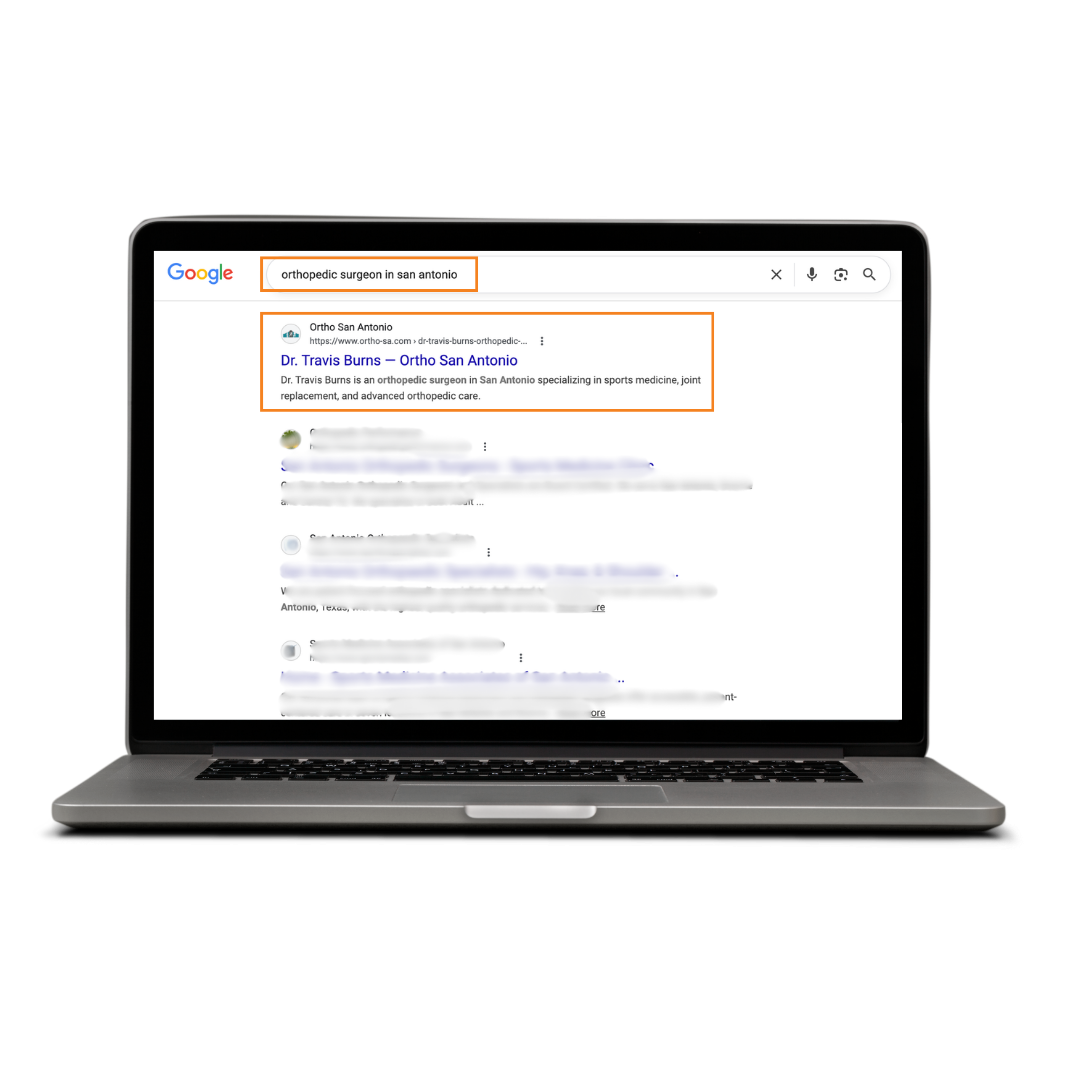
Here’s an example of how when we search “Orthopedic Surgeon in San Antonio” our client shows up!
Patients in Texas, Florida, Louisiana, New Mexico, and Oklahoma often search with city or regional terms, like “orthopedic surgeon in San Antonio” or “sports medicine doctor in Oklahoma City.” Including your city, region, and state in headings and copy, along with a map and accurate contact information, helps connect your practice to local searches.
11. Analytics and call tracking behind the scenes
You cannot improve what you are not measuring. Basic analytics and call‑tracking tools allow your team to see which pages attract the most visitors, which drive phone calls and appointment requests, and where visitors tend to drop off, so you can prioritize high‑impact changes.
How to audit your orthopedic website in 15 minutes
You do not need a full rebuild to spot the biggest opportunities. Start by pulling up your site on a phone and answering a few quick questions:
Does the homepage load quickly and look clean and modern?
Is it obvious within a few seconds who you are, where you are, and which orthopedic services you provide?
Can you see a button to schedule or call without scrolling?
Is there a clear path for someone with knee pain, shoulder pain, or a sports injury to find the right information?
Then, check your main menu on the desktop:
Do you have individual pages for each major clinic location and each major procedure?
Are your doctors easy to find, with complete bios and photos?
Is there a visible way for referring providers to contact or refer patients?
If you answer “no” to several of these questions, your site is probably not working as hard as it could for your practice.
When to redesign vs. optimize what you have

Your website shouldn’t feel like this..
Not every underperforming site needs to be torn down. In many cases, you can get meaningful results by tightening copy, adding missing pages, and improving calls‑to‑action instead of starting from scratch.
Consider a full redesign when:
You don’t own your website. If you are using a third-party templated website and you decide to change, your years’ worth of commitment to SEO can be lost in the switch.
The site is not mobile‑friendly or is built on an outdated platform your team struggles to update.
Load times are consistently slow, even after basic optimization.
The design no longer matches your brand, providers, or facilities.
Focus on optimization when:
The structure is sound, but you are missing key condition, procedure, or location pages.
Calls‑to‑action are buried, inconsistent, or unclear.
Reviews, education content, and provider bios are thin or out of date.
Either path should be guided by your goals: more of the right patients, in the right service lines, in the markets you care about most.
Turning Your Website Into a Patient Generator

Most orthopedic practices already have a website. The real question is whether it is actually helping your practice grow. If your site is slow, difficult to navigate, or missing key condition and procedure pages, it is likely leaving new patient opportunities on the table.
At 2ten Marketing, we work with orthopedic practices to turn their websites into tools that drive real patient volume, not just something that sits online looking nice. If your team is ready for a website that actually supports your growth, connect with our team and let’s get to work!